Exploring the intersection of human creativity and artificial intelligence.
Founded by Jeff Curie, a software executive and product strategist, who runs CurieLabs independently — for science and progress rather than a roadmap, with partners and interns brought in as questions demand. The name honors Pierre and Marie Curie: idols, and, by way of a stubbornly industrious grandfather a few generations back in old France, distant family. Their spirit is the spirit here — follow the fundamental question wherever it leads. Results get published once they're stable enough for others to use or morph — code as clay, not artifact.
The most complete product from the lab. A full AI service, live and open to anyone today.
One person sounds the bell. Family, friends, coworkers, and neighbors speak their memories, add old photos, and share the little details that make a life feel real — from a simple link, no app required. Walt, an AI interviewer, draws the stories out one conversation at a time and shapes them into a biography, tribute, toast, or keepsake worth keeping. No one person has to carry the whole story alone.
Fast enough for a memorial. Gentle enough for a Sunday afternoon. Built for the person who said, "Somebody should really gather all this before it's gone."
Working AI experiments, shipped and freely available. Each one is a real codebase you can drop straight into Claude and reshape into something of your own.
Build real software
without writing code.
The method behind every project in this catalog. 18 complete, reusable prompts that take you from first idea to working product — you direct, the AI builds. Everything above was made with this exact approach.
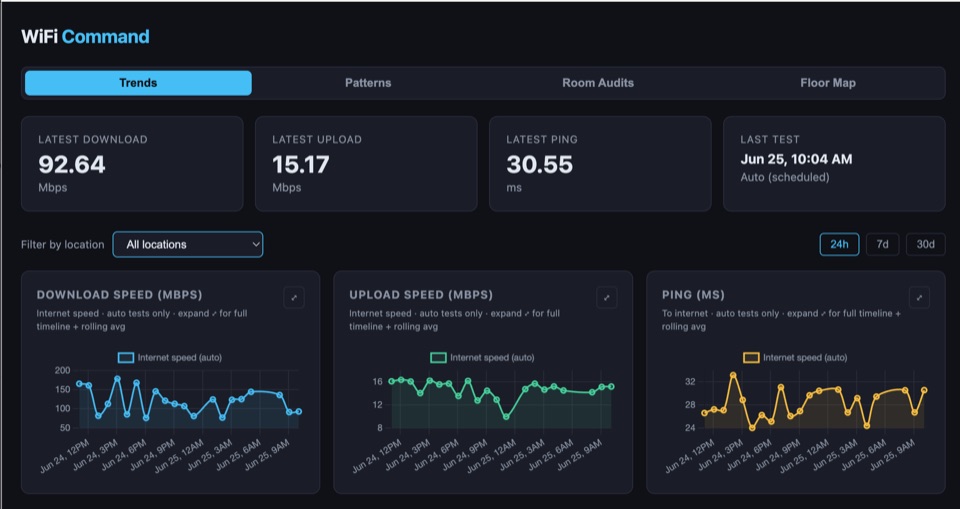
Runs 24/7 on any always-on machine and measures your real ISP speed over time. Walk room to room with your phone to audit WiFi signal strength and find where your mesh network is losing speed.

Financial news, de-hyped. Reads dozens of public sources, strips opinion and emotional language, and surfaces only what actually happened — classified, scored, and summarized. No ads. No algorithms. No subscription.

A personal time management tool for staying on track across all your goals. One place to see what matters, what's pending, and what's slipping — without the overhead of enterprise project tools.
CurieLabs is where I get to flex the thing I'm actually good at — thinking sideways instead of down a roadmap — and put real optimism behind what AI can do for ordinary people. After a career running software businesses, I learned to crawl, then walk, then run building my own software without ever writing a line of code: the same tools anyone can open today, just aimed somewhere imaginative. Call it Imagineering anyone can use. Every project here ships the same way it was built — as clay, not a finished artifact, a starting point meant to be reshaped until it fits whoever picks it up.
The fundamental question behind this experiment: could an AI companion be useful and present enough to ease loneliness, and sharpen the mind, at the same time? Scotty is a personality-driven AI companion built on Reachy Mini, an open-source robotics platform from Pollen Robotics (now part of Hugging Face). Reachy gives an AI agent the ability to convey emotion through gaze and gesture — opening a kind of human interaction a screen never could. There's no display and no keyboard here. Voice is the entire interface.
The goal is bigger than one robot: Scotty is a testbed for what comes after the chatbot. Personal assistants, lab partners, guides, and companions — embodied, expressive, voice-only — are all being tested and refined here before any of them have a name of their own.